
What to Do When a Tree Falls on Your House in Burke County
24/7 Emergency Dispatch
Immediate storm & hazard tree response
Serving Since 2021
NC LLC #2158995 · Fully Insured
4.4★ Google Rating
35+ verified homeowner reviews
Zero Yard Damage Rigging
Controlled rope descent · No heavy ruts
Burke County Local
Headquartered in Morganton, NC
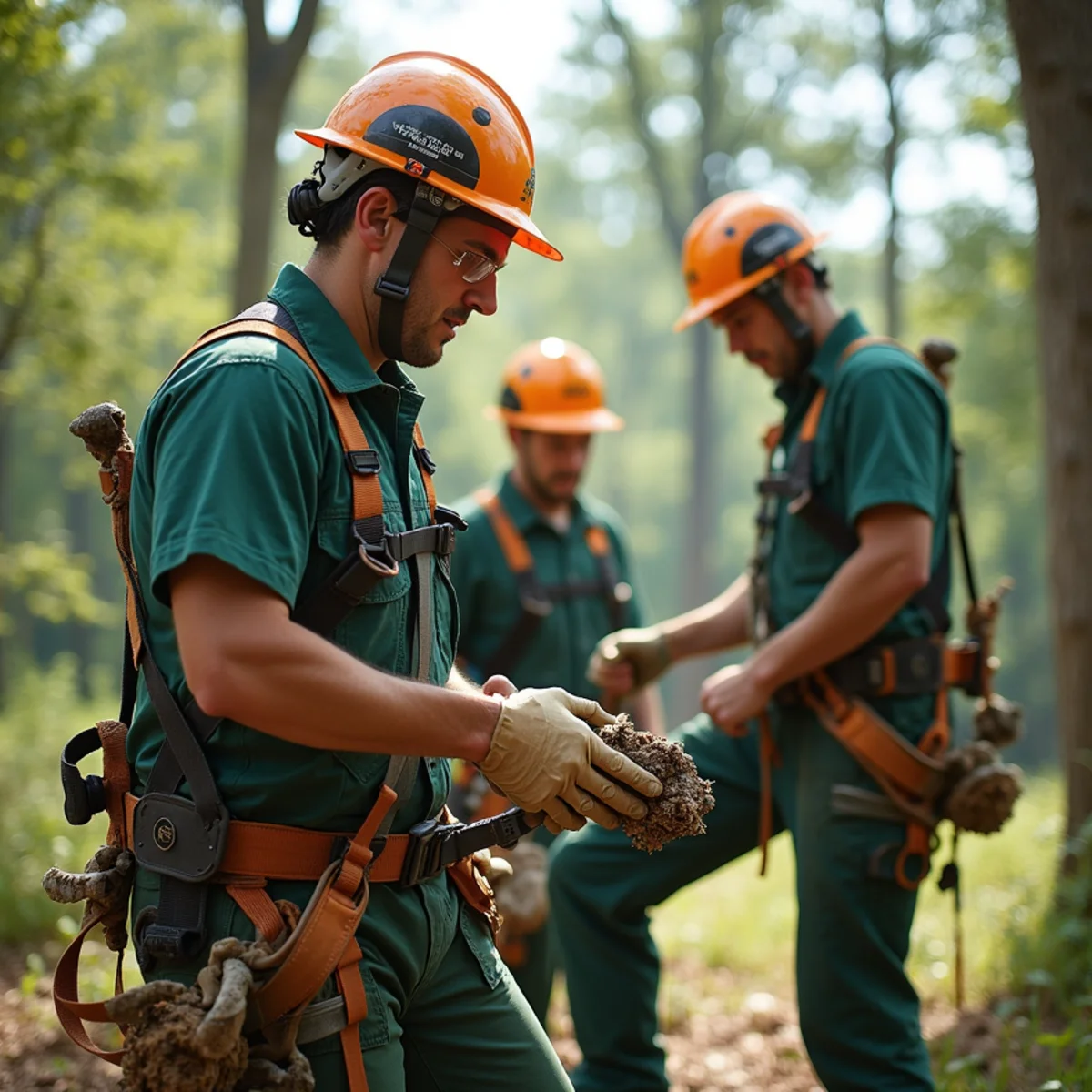
Immediate Life Safety & Emergency Evacuation: The First 5 Minutes
When a multi-ton hardwood or pine crashes into your home during a severe foothill storm in Burke County, immediate life safety takes precedence over every other consideration. The kinetic impact of a falling tree—often weighing between 8,000 and 25,000 pounds—transfers immense lateral and vertical shock loads through roof rafters, collar ties, and exterior bearing walls. Even modern engineered roof trusses can suffer catastrophic shear failure and joint separation under such concentrated dynamic shock loads.
First, evacuate all occupants immediately from rooms beneath or adjacent to the impact zone. Even if a ceiling appears intact from the inside, hidden fracture lines in 2x6 or 2x8 ceiling joists can give way minutes or hours later under shifting gravitational loads, wind vibration, and rainwater accumulation. Do not enter attics or upper floor bedrooms to retrieve personal belongings, documents, or valuables. If ceiling drywall is visibly bowing, water is cascading through recessed light fixtures, or interior doors are suddenly jammed shut due to framing deflection, treat the entire structure as structurally compromised and evacuate immediately to the ground level or a neighbor's home.
Once outside, verify everyone's physical safety and account for all family members and pets. If anyone is injured or trapped by structural debris, dial 911 immediately. Take shelter away from the house in a secure vehicle or detached outbuilding, maintaining a perimeter distance equal to at least 1.5 times the remaining standing height of the tree. Weakened limb sections, splintered trunk shards known as widowmakers, or secondary branches tangled in the canopy can break loose and drop without warning long after the primary collision has occurred.
Utility Triage: Power, Gas & Water Protocol in Burke County
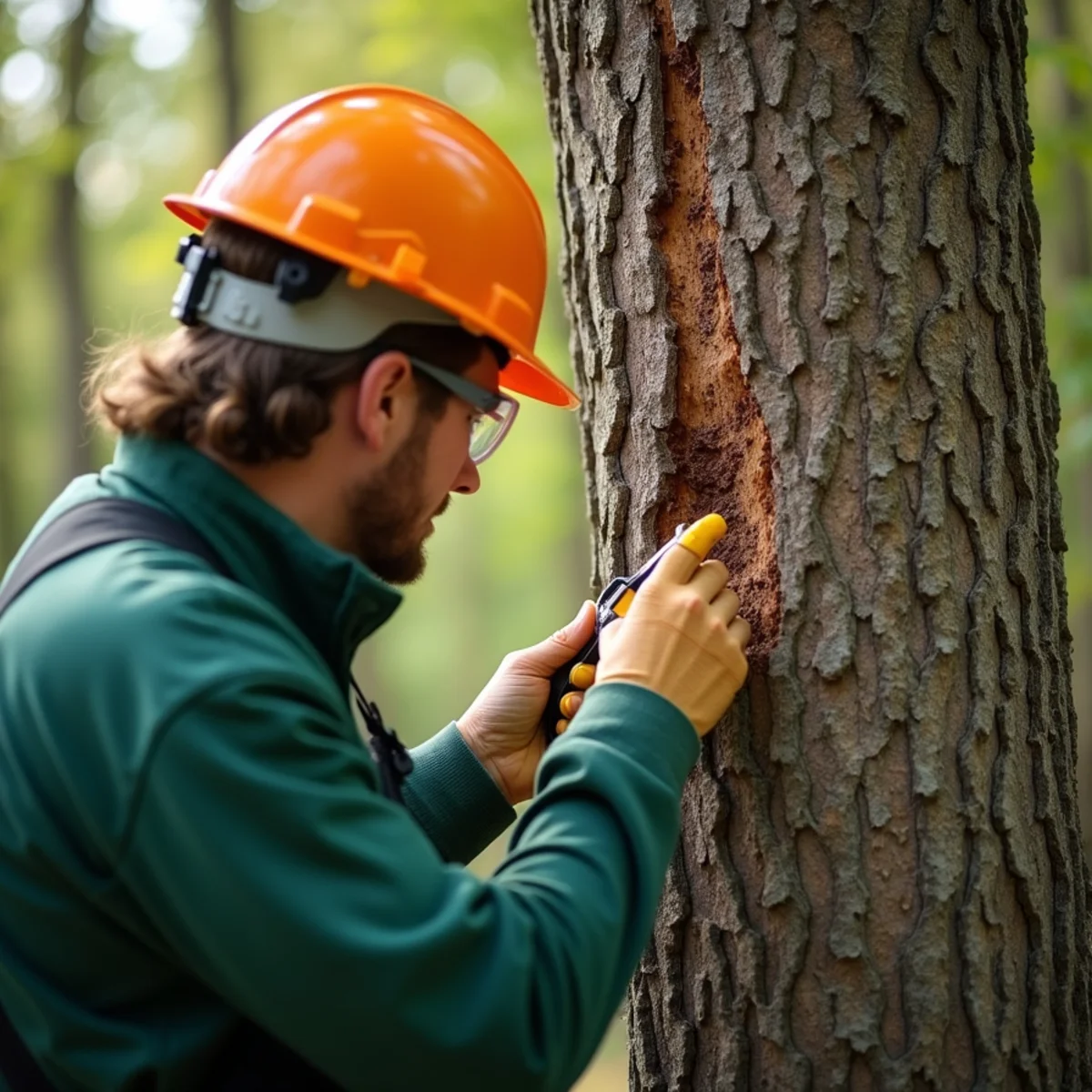
A collapsed tree rarely impacts a roof without disrupting residential utilities. Severed electrical conductors, twisted copper gas lines, and ruptured plumbing create immediate fire, electrocution, and catastrophic flooding hazards that must be neutralized methodically before any structural assessment or tree removal can proceed.
Survey the exterior service entrance from a safe distance. If you observe sparks, hear loud electrical humming or buzzing, or see snapped conductors arcing against aluminum gutters, corrugated roofing, or chain-link fencing, assume the entire structure and surrounding yard are lethally energized. If you reside within the City of Morganton, contact the City of Morganton Electric Department immediately; if you live in outlying county areas such as Glen Alpine, Salem, Chesterfield, or Jonas Ridge, dispatch Duke Energy or Blue Ridge Energy emergency lines. Never attempt to touch a service mast, breaker panel, or fallen wire, even if wearing rubber boots or work gloves.
Next, monitor for the distinct sulfurous odor of mercaptan indicating natural gas or liquid propane leakage. Tree roots ripping from the ground can shear underground gas feeds, while descending boles can crush exterior propane tanks or copper supply lines. If you smell gas, evacuate the property upwind immediately, avoid operating light switches or cell phones within 50 feet, and notify emergency dispatchers and your fuel supplier. If it is safe to enter an undamaged utility room or basement outside the impact footprint, shut off your main water valve to prevent pipe rupture flooding if secondary framing settles under the timber's deadweight.
Stabilizing the Exterior Perimeter & Assessing Spring Poles
After emergency services and utilities have secured the perimeter, property owners must understand the hidden mechanical stresses holding the fallen tree in place. A tree draped across a residential roof is not a static pile of timber; it is a complex spring-loaded system balancing tremendous tension and compression forces across multiple structural planes and roof angles.
Arborists classify bent branches trapped under the trunk as spring poles. When a 60-foot oak strikes a ridge beam, branches underneath the trunk are forced into extreme deflection against roof sheathing, fascia boards, and exterior masonry walls. The top wood fibers of these limbs are held in high-load tension, while the underside is jammed in severe compression. Inexperienced homeowners or amateur handymen who attempt to cut these branches with chainsaws frequently unleash violent releases of stored elastic energy. The severed branch can snap outward like a released catapult, throwing the saw operator off the roof, shattering ladders, or driving trunk wood deeper through the ceiling.
Furthermore, if the tree uprooted rather than snapped at the trunk, the root plate remains suspended on the lawn under severe counterbalance tension. Cutting the trunk free near the eaves can cause the multi-ton root plate to violently slam back into its crater, crushing anyone standing within the root zone. Keep everyone clear of the drop zone and never climb onto a roof holding a fallen tree until an arborist equipped with dynamic rigging gear has evaluated the load distribution and stabilized the trunk.
North Carolina Homeowners Insurance: Photos, Tarps & Negligence Rules
Navigating homeowners insurance in North Carolina after a tree strikes your home requires meticulous documentation and adherence to standard policy covenants. Under North Carolina insurance law, standard HO-3 homeowner policies cover damage caused by fallen trees striking covered structures (such as your primary dwelling, garage, or shed), regardless of whether the tree originated on your property or a neighbor's parcel.
In the eyes of North Carolina courts, a healthy tree brought down by sudden storm winds, saturated soils, or microbursts is legally classified as an "Act of God." In this scenario, your own homeowners policy pays for structural repairs, interior contents damage, and the cost of tree extraction from the structure, minus your deductible. Your neighbor is generally not legally liable for damage caused by their tree falling onto your home unless you can conclusively prove prior negligence—meaning the neighbor had written arborist notice of visible decay, dead wood, or imminent failure and failed to take corrective action.
Before any chainsaw touches the wood, capture extensive, high-resolution photographic and video documentation from multiple ground angles. Photograph where the trunk crossed the property boundary, where it made structural impact with your roof or chimney, and any cracked framing inside the attic or second-story rooms. Retain all invoices from emergency response teams, as your policy's reasonable repairs clause requires policyholders to take prompt action to mitigate secondary water damage. Clear communication with your claims adjuster guarantees seamless expense reimbursement.
Technical Arborist Crane-Free Rigging: Lifting Wood Off Trusses Without Secondary Punch-Through
Extracting a massive tree from a residential roof demands surgical engineering. If an inexperienced crew attempts to cut large trunk rounds directly over damaged rafters, the sudden release of weight can cause remaining trunk sections to pivot violently, driving heavy wood through ceiling joists and causing far more structural destruction than the initial storm impact.
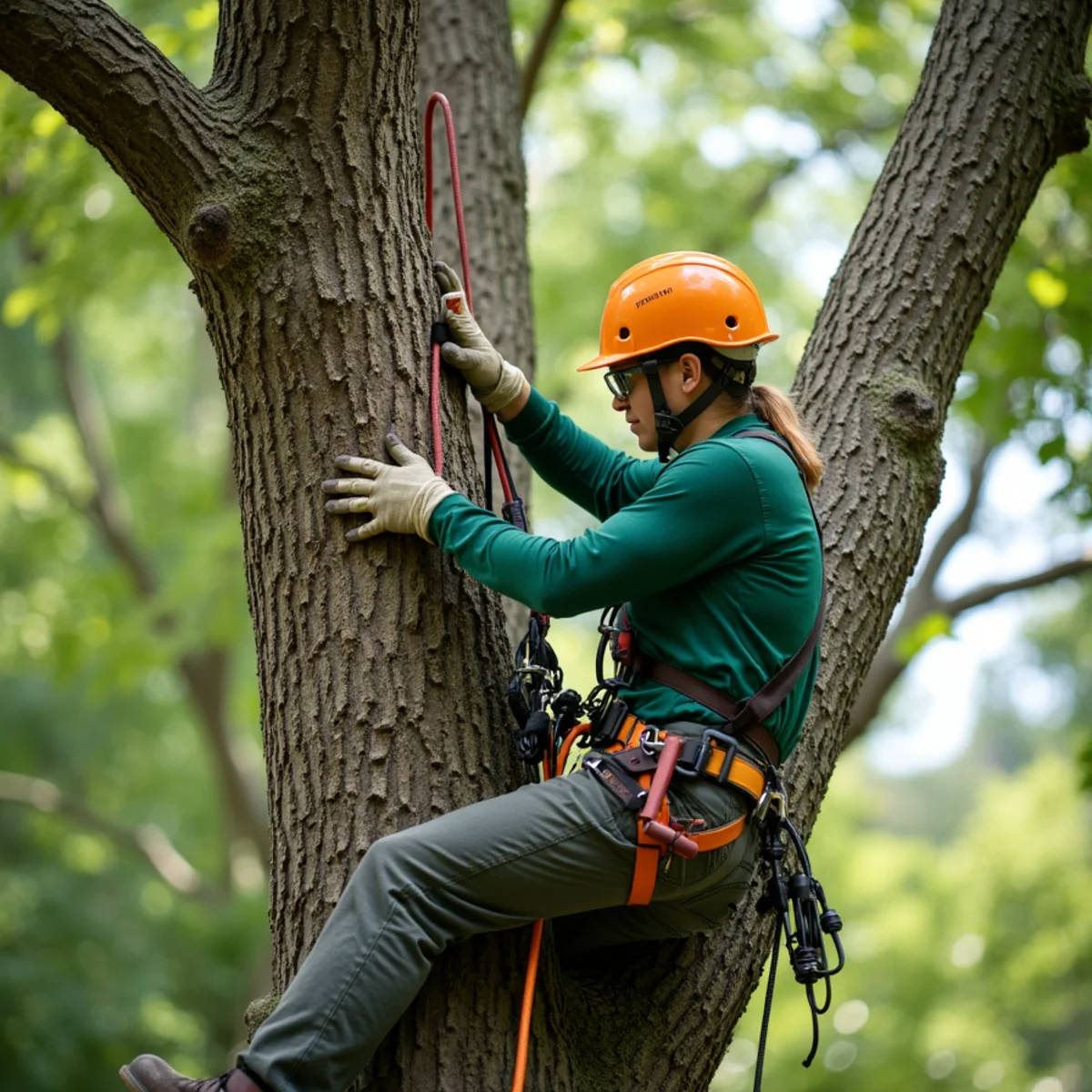
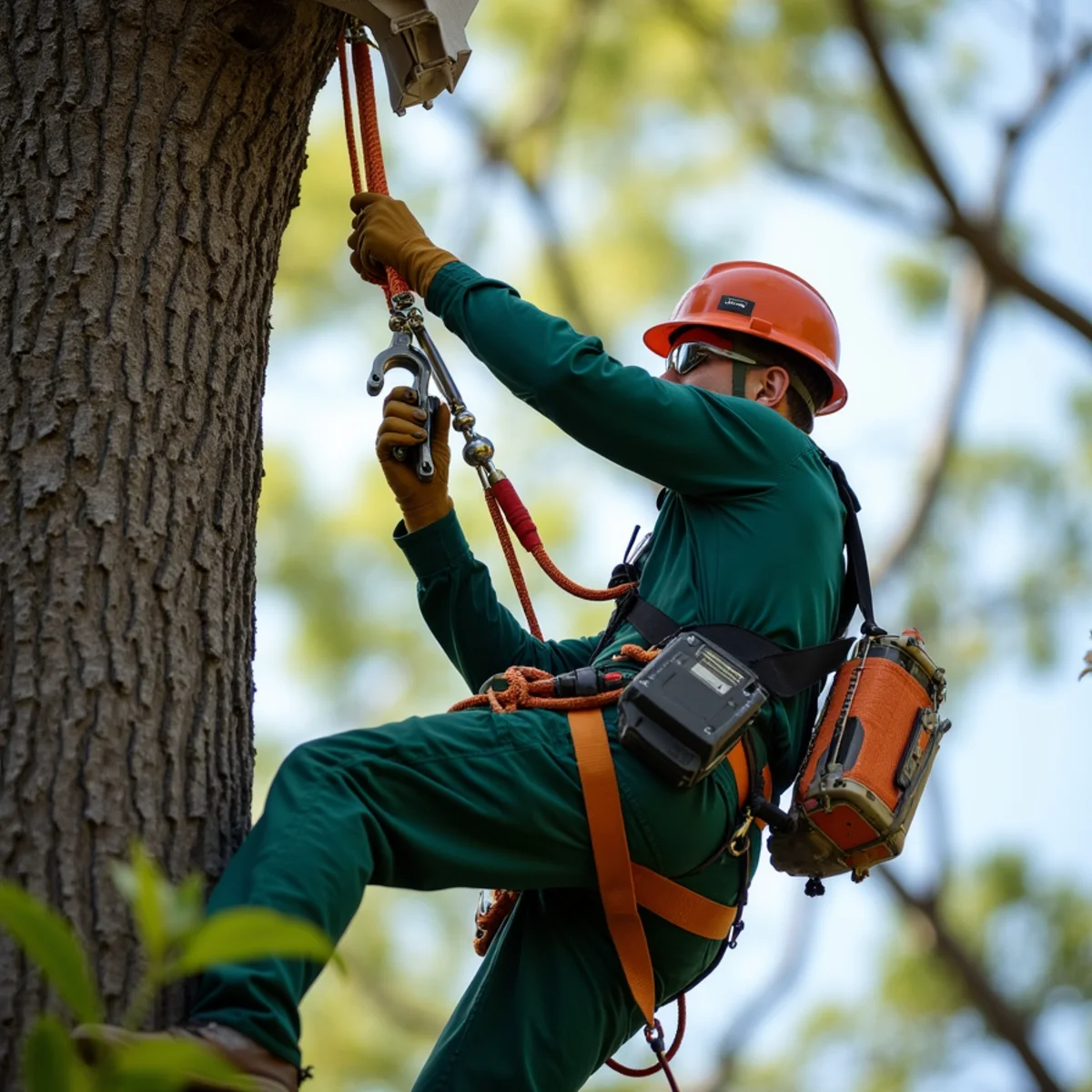
RAM Tree Service LLC (NC LLC #2158995) specializes in low-impact, crane-free technical extraction. In many Burke County neighborhoods with narrow mountain switchbacks, steep terraced hillsides, or mature front yard landscaping, mobilizing a 40-ton commercial boom crane is physically impossible or risks crushing septic tanks and cracking concrete driveways. Instead, lead climber Ron Martin accesses sound adjacent trees or elevated anchor points using static arborist lifelines, rigging high-capacity pulleys and redirects directly over the fallen bole.
Working methodically from canopy tips toward the trunk, our team relieves branch tension in controlled segments. Each limb is secured with synthetic bull ropes and counter-balanced through an anchored ground friction brake (Port-a-wrap) operated by Buddy. By applying mechanical lifting advantage, we take the deadweight load off roof trusses before initiating relief cuts. Timber sections are suspended mid-air and lowered softly into cleared yard drop zones, preserving damaged decking and preventing structural punch-through while keeping residential turf completely undamaged.
Emergency Tarping, Drying-In & Whole-Property Tree Health Triage
The moment the timber is safely lifted clear of the roofline, immediate drying-in is essential to stop rainwater, snow, or debris from ruining interior drywall, hardwood flooring, insulation, and electrical systems. Emergency tarping should be performed by experienced tree crews who understand how to secure waterproof covers without puncturing intact shingles or overloading damaged rafters.
Our team installs commercial-grade, UV-resistant reinforced polyethylene tarps over all breached roof surfaces. We anchor tarps using wooden furring strips secured into solid framing above the roof ridge, ensuring continuous water shedding over valleys and eaves without creating pooling pockets. We provide your insurance adjuster with complete before-and-after photographs, itemized cut logs, and emergency tarping receipts to expedite your claim reimbursement.
Finally, a severe storm that brought down one mature tree rarely leaves surrounding timber unscathed. Heavy wind shear and torrential rainfall saturate Burke County's dense Cecil red clay soils, loosening lateral root plates and creating microscopic fracture lines in adjacent oaks, pines, and poplars. Ron Martin conducts a comprehensive whole-property hazard assessment, inspecting surrounding trees for root heave, trunk twists, cracked limb crotches, and asymmetric crown loads. Identifying these secondary defects early protects your home from subsequent storm failures. Contact RAM Tree Service LLC at (213) 468-5153 for prompt 24/7 emergency response and post-storm arborist inspections.
Recommended Arborist Services & References:

About the Author: Ron Martin, RAM Tree Service LLC
Ron Martin is the owner and lead climber at RAM Tree Service LLC in Morganton, NC. Dedicated to proper arboriculture, rigging physics, and protecting client lawns from heavy machine ruts, Ron has guided Burke County property owners through routine prunings and catastrophic post-Helene storm recoveries.
More Tree Care Guides & Advice
Tree on a Power Line in Morganton: Who to Call First
Tree on a power line in Morganton, NC? Learn whether to call Duke Energy, city electric or an arborist first. For tree triage, call (213) 468-5153.
Leaning Tree After Heavy Rain: When Is It an Emergency?
Is a leaning tree after heavy rain an emergency in Morganton, NC? Root plate heaving, saturated clay and hazard triage. Call (213) 468-5153 today.
Tree Removal Cost in Morganton, NC: 2026 Price Guide
Realistic tree removal costs in Morganton, NC: tree size, access, rigging factors and typical Burke County price ranges. Call (213) 468-5153 today.
Facing an Active Tree Emergency in Burke County?
Tree on your roof, power line, vehicle, or blocking a private drive? Our climbing and rigging crew is standing by 24/7 across Morganton and the foothills.
Frequently Asked Questions
Direct, transparent answers regarding tree work, rigging methods, insurance documentation, and scheduling.
Generally, no. Standard North Carolina homeowners insurance policies only cover tree removal expenses if the fallen tree struck a covered structure (house, detached garage, workshop, fence) or is blocking your primary driveway or handicap access ramp. If a tree falls cleanly across your open lawn without touching buildings or access routes, the homeowner is typically responsible for debris cutting and cleanup costs out of pocket.
Our Morganton, NC Base of Operations
Centrally positioned on Old Hickory Tree Road in Morganton to quickly dispatch climbing crews, bucket-free rigging gear, chippers, and emergency response teams across Burke, Caldwell, McDowell, and Catawba counties.
Ready for an Honest, On-Site Tree Service Estimate?
Climbers who rope-lower limbs to protect your yard, stone walls, and roofs. Call Ron & the RAM Tree Service team directly.